ByJohn A
Government Hard Drive Shredding: How to Prevent Data Breaches
Government agencies handle large volumes of sensitive information, including confidential records, employee details, financial data, public service information, and classified material. Protecting this information is essential for maintaining public trust and preventing unauthorised access. When computers, servers, and storage devices reach the end of their useful life, simply deleting files may not be enough to protect the data they contain. Government hard drive shredding provides a physical method of destroying storage media to help prevent data breaches and reduce information security risks.
Understanding how hard drive shredding works, when it is necessary, and how it fits into a secure data disposal process can help government departments manage sensitive information more effectively. A well-planned approach ensures that retired equipment does not become a potential source of data exposure.
Why Data Security Matters for Government Agencies
Government departments often store information that requires careful handling throughout its lifecycle. This may include personal information, internal communications, procurement records, public sector financial documents, and sensitive operational data.
If this information falls into the wrong hands, the consequences can include identity theft, financial fraud, privacy violations, operational disruption, and reputational damage. In certain situations, exposed information may also create risks for public safety or national security.
Data protection responsibilities do not end when a computer is replaced or a server is decommissioned. Information can remain on a storage device even after it has been removed from active use. Therefore, government agencies need secure procedures for handling, transporting, and destroying retired storage media.
Physical destruction is one option for reducing the risk of data recovery when a hard drive is no longer required.
What Is Government Hard Drive Shredding?
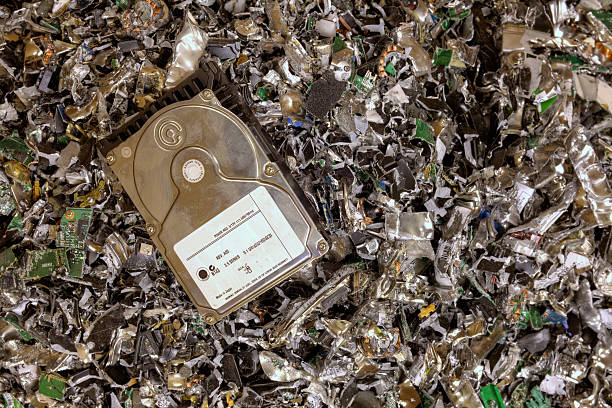
Government hard drive shredding is the physical destruction of hard disk drives to make the stored information inaccessible through normal use or conventional data recovery methods.
The process uses specialised industrial equipment to break storage devices into small fragments. Depending on the equipment and applicable security requirements, the resulting material may be reduced to pieces that make practical data reconstruction extremely difficult.
How Hard Drive Shredding Works
The process generally involves several stages. First, storage devices are identified and collected from computers, servers, workstations, and other IT equipment. Each device may be recorded in an inventory to support accountability.
Next, the devices are checked and prepared for destruction. They are then processed through suitable shredding equipment, which physically breaks apart the drives and their internal storage components.
Finally, destruction records or certificates may be provided to document the work completed. The records can support internal audits and demonstrate that the organisation followed its approved disposal procedures.
The exact process should reflect the sensitivity of the information, the type of storage media, and the agency’s applicable security requirements.
Why Deleting Files Is Not Always Enough
Deleting a file usually removes its reference from the file system rather than immediately destroying every underlying data element. Formatting a drive may also leave information recoverable, depending on the method used.
Even when a storage device appears empty, remnants of previously stored information may remain. This can create risks if the device is sold, reused, donated, or discarded without suitable sanitisation.
Physical shredding addresses this concern by destroying the storage medium itself. However, agencies should select the destruction method according to their security policies and any requirements applicable to the information being handled.
How Government Hard Drive Shredding Helps Prevent Data Breaches
Secure disposal practices help reduce opportunities for unauthorised individuals to access information after equipment leaves government control.
1. Preventing Unauthorised Data Recovery
Old hard drives may contain sensitive records that are no longer needed for daily operations. If these devices are misplaced or improperly discarded, someone may attempt to recover their contents.
Shredding physically damages the storage components, making conventional access and data recovery impractical when destruction is performed to the required standard. This helps reduce the likelihood that discarded equipment will become a source of exposed information.
2. Protecting Personal and Confidential Information
Government agencies may hold personal details relating to employees, contractors, residents, and service users. They may also maintain internal documents that should not be publicly accessible.
Proper destruction helps prevent this information from being exposed through retired equipment. It supports privacy protection and demonstrates that the organisation treats information security as an ongoing responsibility.
3. Reducing Risks During Equipment Disposal
Moving old IT equipment between departments, storage facilities, and disposal locations can introduce additional security risks. Devices may be lost, stolen, or handled by people who are not authorised to access their contents.
Agencies can reduce these risks by establishing clear collection procedures, limiting access, maintaining inventory records, and arranging secure destruction. Where appropriate, on-site shredding may reduce the need to transport sensitive storage devices elsewhere.
4. Supporting Compliance and Accountability
Government organisations may be subject to data protection laws, records management rules, contractual obligations, and specific information security policies. These requirements can determine how information must be retained, sanitised, or destroyed.
Hard drive shredding can form part of a compliant disposal strategy, but it does not automatically guarantee compliance. Agencies must verify the applicable requirements, follow approved destruction methods, and maintain appropriate documentation.
See also: How Businesses Can Source Blank Hoodies for Seasonal Clothing Collections
Best Practices for Secure Government Hard Drive Shredding
A consistent process helps agencies protect information while maintaining control over retired IT assets.
Develop a Clear Data Destruction Policy
A written policy should explain how storage devices are identified, classified, stored, transported, sanitised, and destroyed. It should also define staff responsibilities and approval procedures.
The policy needs to distinguish between devices that can be securely sanitised for reuse and those that require physical destruction. The decision should consider information sensitivity, device condition, and applicable security standards.
Maintain an Accurate Inventory
Before destruction, agencies should record the storage devices scheduled for disposal. Relevant details may include device type, asset identification number, department, storage location, and destruction status.
Inventory records help confirm that every device has been accounted for. They also make it easier to investigate discrepancies and demonstrate that approved disposal procedures were followed.
Choose Appropriate Destruction Methods
Not every storage device can be handled in exactly the same way. Traditional hard disk drives store information magnetically, while solid-state drives use flash memory.
Because these technologies store data differently, destruction procedures must account for the type of media involved. Agencies should ensure that the selected equipment and process meet the required security specifications for each device.
Restrict Access to Retired Devices
Storage devices awaiting destruction should be kept in a controlled area with access limited to authorised personnel. Clear labelling, secure containers, and documented transfers can reduce the risk of loss or unauthorised handling.
Agencies should maintain control of devices throughout the disposal process, including any movement between facilities.
Keep Destruction Documentation
Records provide evidence that storage devices were processed according to established procedures. Depending on the agency’s requirements, documentation may include asset identifiers, destruction dates, quantities, responsible personnel, and certificates of destruction.
These records should be stored securely and retained for the period specified by the organisation’s records management policy.
On-Site and Off-Site Hard Drive Shredding
Government agencies may choose between on-site and off-site destruction, depending on their security requirements and operational needs.
On-Site Shredding
On-site shredding takes place at the agency’s premises or another approved location. It allows authorised staff to observe the destruction process and may reduce the risks associated with transporting storage devices.
This approach can be useful when handling highly sensitive information or when internal policies require destruction within a controlled environment.
Off-Site Shredding
Off-site shredding involves transporting storage devices to a dedicated destruction facility. This option may be suitable when secure transport arrangements, documented chain of custody, and appropriate facility controls are in place.
Before selecting an off-site service, agencies should review its security procedures, transport arrangements, documentation practices, and ability to meet the relevant destruction requirements.
The most appropriate option depends on information sensitivity, logistics, costs, and the organisation’s risk assessment.
Common Mistakes to Avoid
Even with a formal disposal policy, certain mistakes can weaken information security.
One common mistake is assuming that deleting files or formatting a drive guarantees that the information cannot be recovered. Another is disposing of devices without confirming that they have been included in the destruction inventory.
Agencies should also avoid leaving retired equipment in unsecured storage areas or transferring devices without documenting who is responsible for them. Selecting a destruction method without considering the type of storage media can create additional risks.
Finally, failing to retain suitable documentation may make it difficult to verify that the process was completed correctly. Regular reviews and staff training can help prevent these issues.
See also: When a Storm Hits: Why a Working Sump Pump Is Essential for Protecting Your Home
Conclusion
Government hard drive shredding is an important part of protecting sensitive information when storage devices reach the end of their useful life. By physically destroying retired drives, agencies can reduce the risk of unauthorised data recovery and limit potential exposure during equipment disposal.
An effective approach combines suitable destruction methods with accurate inventories, restricted access, secure handling, documented procedures, and regular policy reviews. Government organisations should assess their information security obligations before choosing a destruction method and ensure that every device is managed according to its sensitivity and applicable requirements.
Ultimately, secure data disposal is not simply the final step in an IT asset’s lifecycle. It is a critical part of a broader information security strategy that helps protect confidential records, support accountability, and maintain public trust.